Africa - The Royal Geographical Society Collection


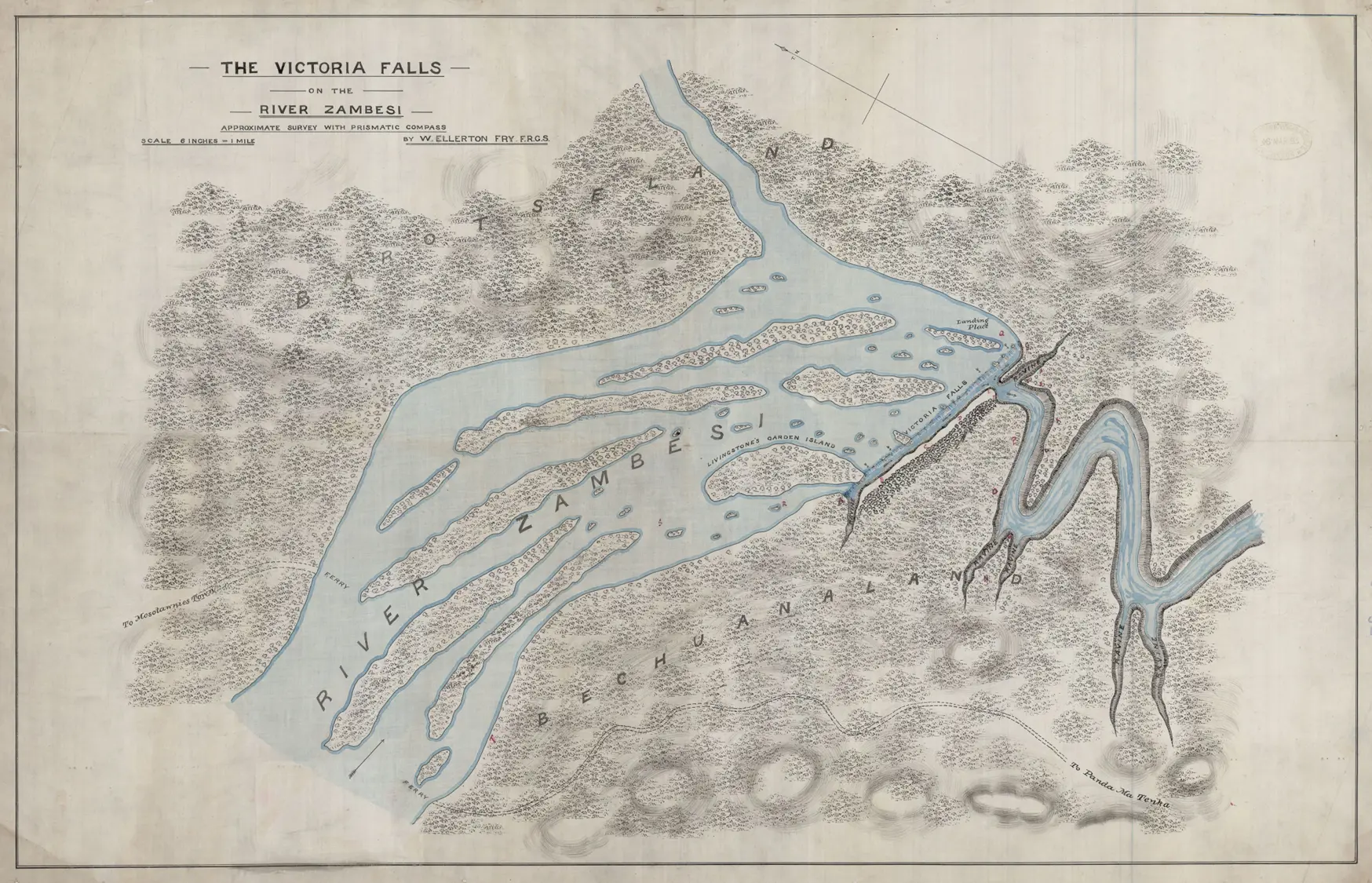
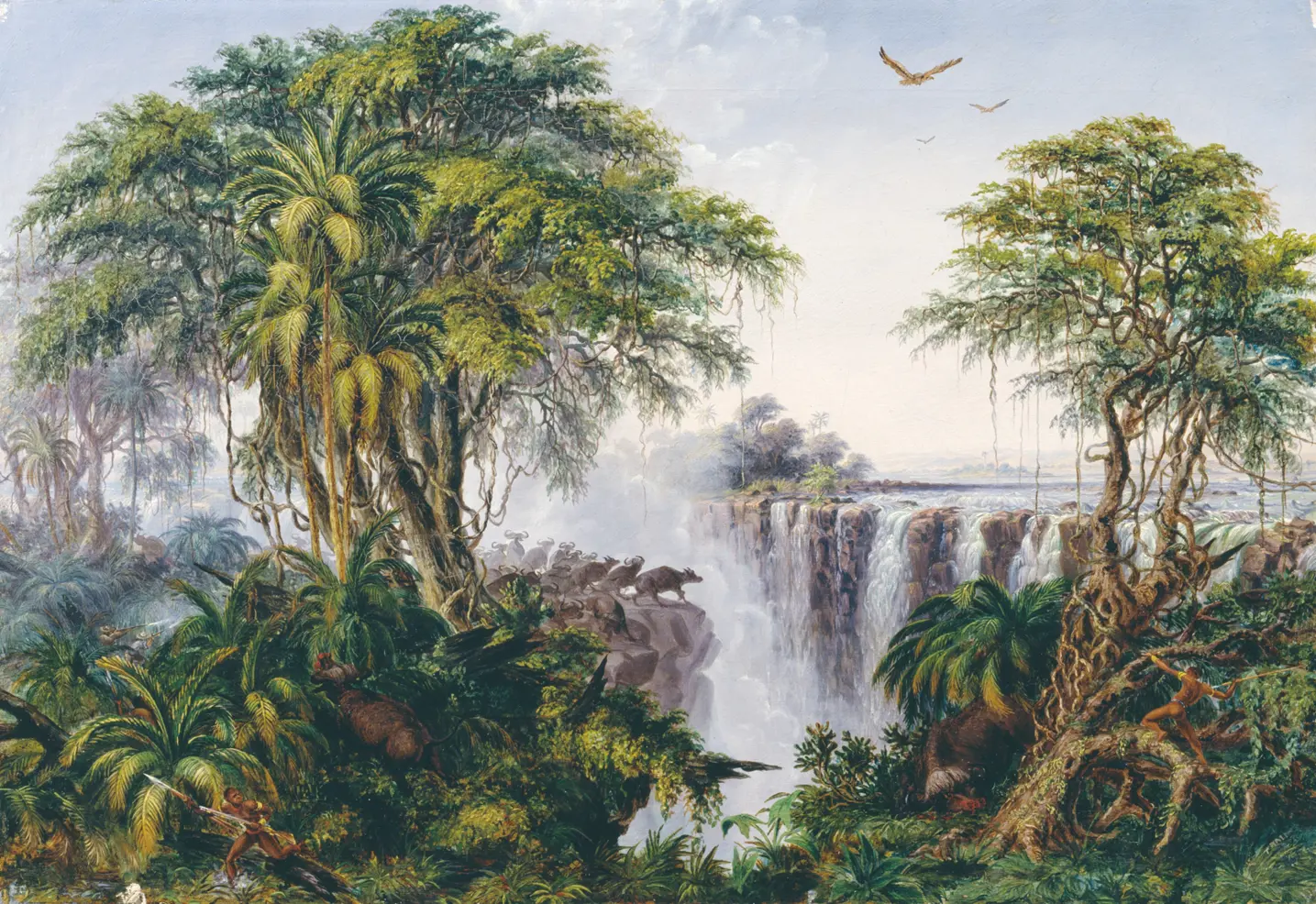
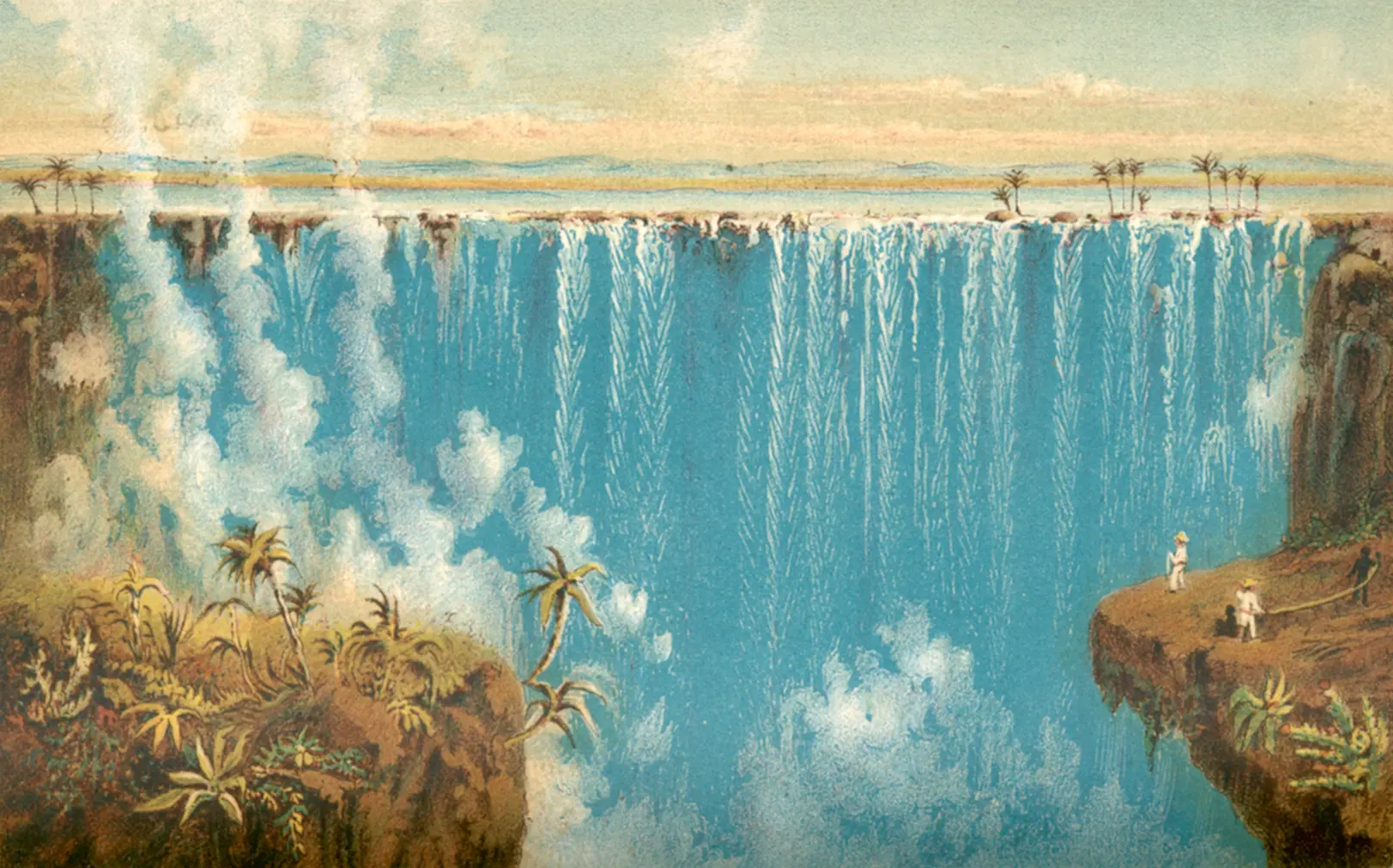
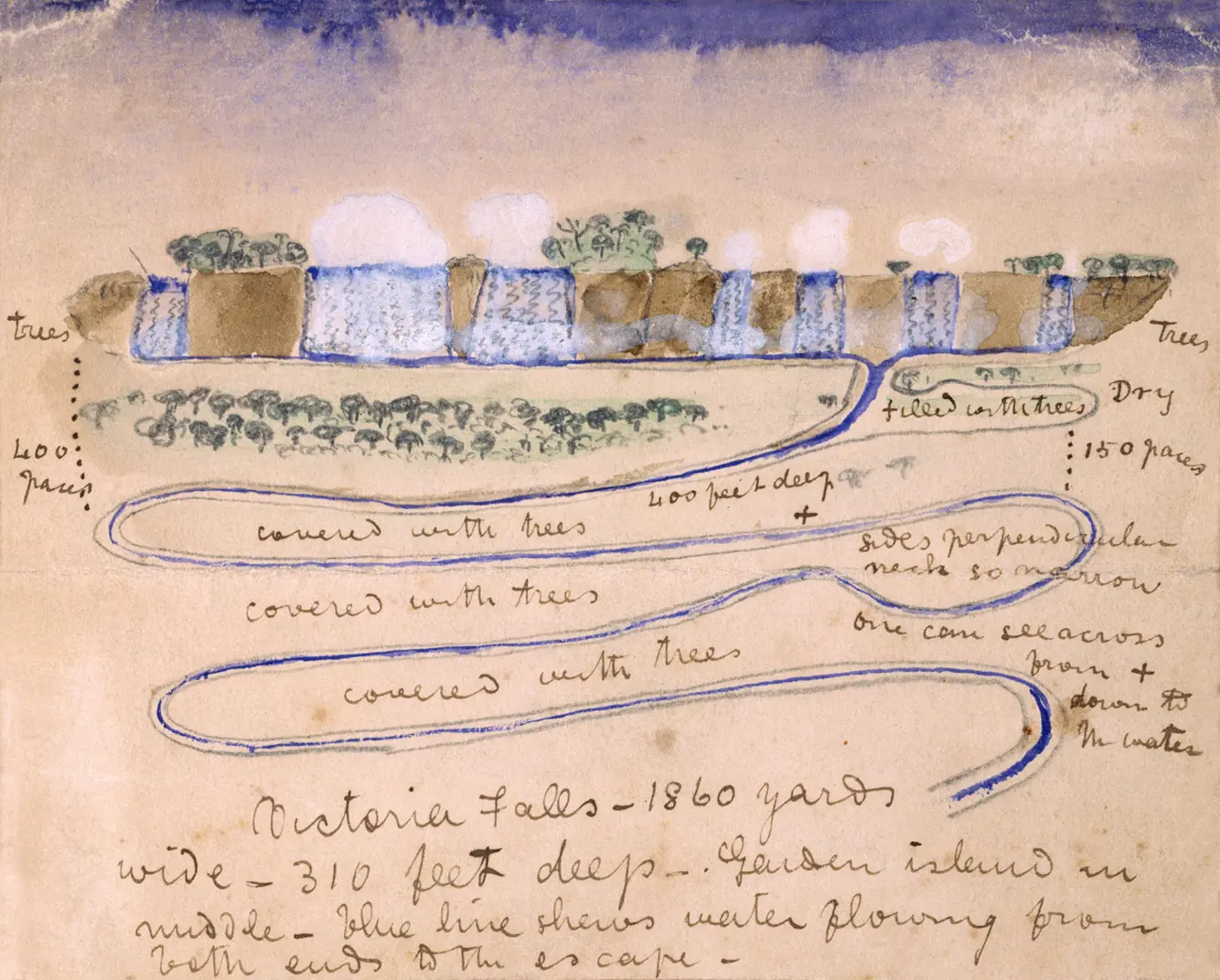
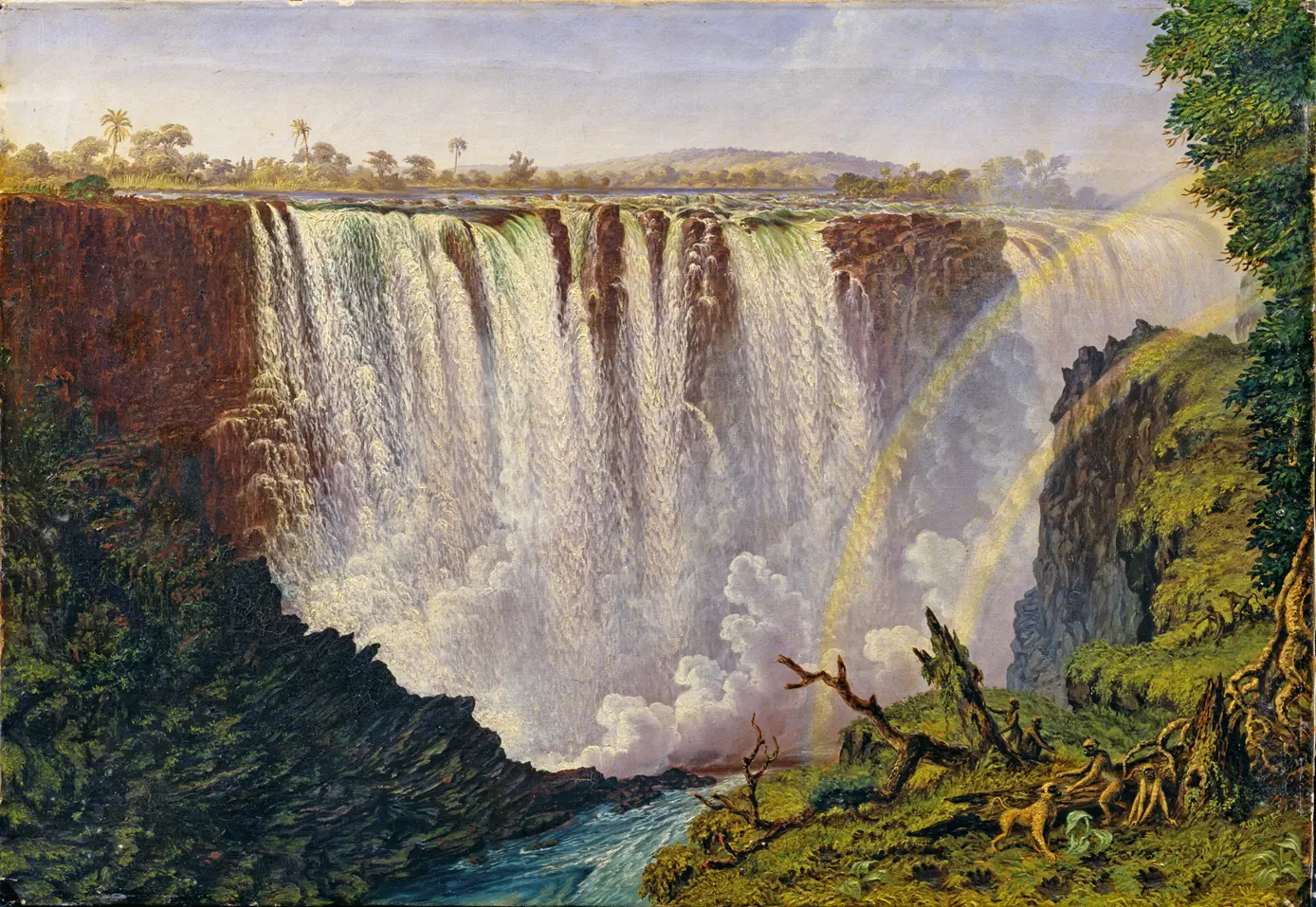
The Royal Geographical Society holds a variety of material relating to the historical geography of the Victoria Falls. Highlights include various instruments used by David Livingstone during his exploration of Africa as well as a collection of his manuscripts and maps documenting his Zambezi expedition from 1858-1864. The Society also holds a large number of watercolour and oil paintings by Thomas Baines which capture the dramatic beauty of the Mosi-oa-Tunya.

In the footsteps: David Livingstone  | In the footsteps: Thomas Baines | In the footsteps: Mary Sophia Johnston

In the footsteps of: David Livingstone

David Livingstone (1813-1873) was a doctor, missionary and explorer. Raised by a devout family, he sought to learn medicine as part of a Christian mission. While studying, he attended London Missionary Society lectures and met missionaries working in Southern Africa, sparking his interest in the region.

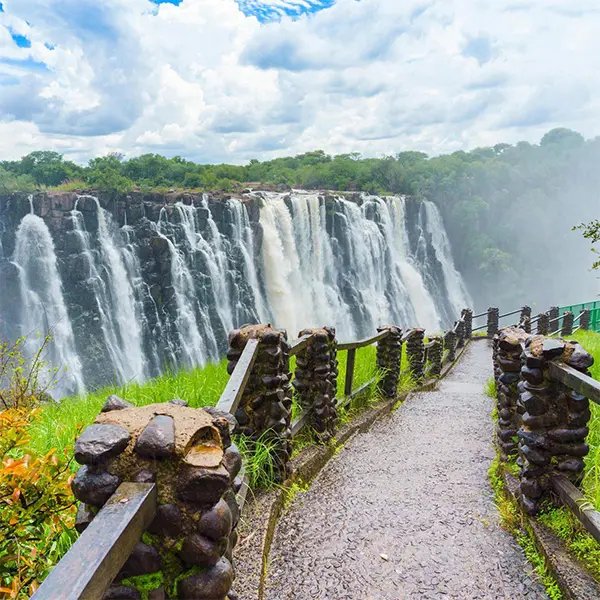
Livingstone began his missionary travels among the Tswana peoples, always with an eye to pushing farther inland and away from established missions. After a journey to Lake Ngami in the interior he set his sights on the Zambezi River and crossing Africa. During this venture he became one of the first Europeans to see Mosi-ao-Tunya - 'the waters that thunder', renaming the waterfall Victoria Falls in honour of Queen Victoria. In May 1856 he reached the mouth of the Zambezi, becoming the first European to cross the width of southern Africa. In 1866 he set off on another expedition in search of the headwaters of the Nile - a quest he continued until his death in 1873.

In the footsteps of: Thomas Baines

Thomas Baines (1822-1875) was an artist and explorer, born in King's Lynn, Norfolk. He apprenticed to a coach painter before leaving England for Cape Town, South Africa to begin work as a scenic and portrait artist.

In 1858 he was appointed as artist on the Zambezi expedition led by David Livingstone. However, due to a dispute between the two men he departed the expedition part way through, later joining James Chapman on his expedition to the Victoria Falls where he completed a route survey and produced a large volume of striking sketches and watercolours. His drawings of the Victoria Falls, reproduced as coloured lithographs, form a handsome folio titled 'The Victoria Falls: Zambesi River sketched on the spot', published in 1865.

In the footsteps of: Mary Sophia Johnston

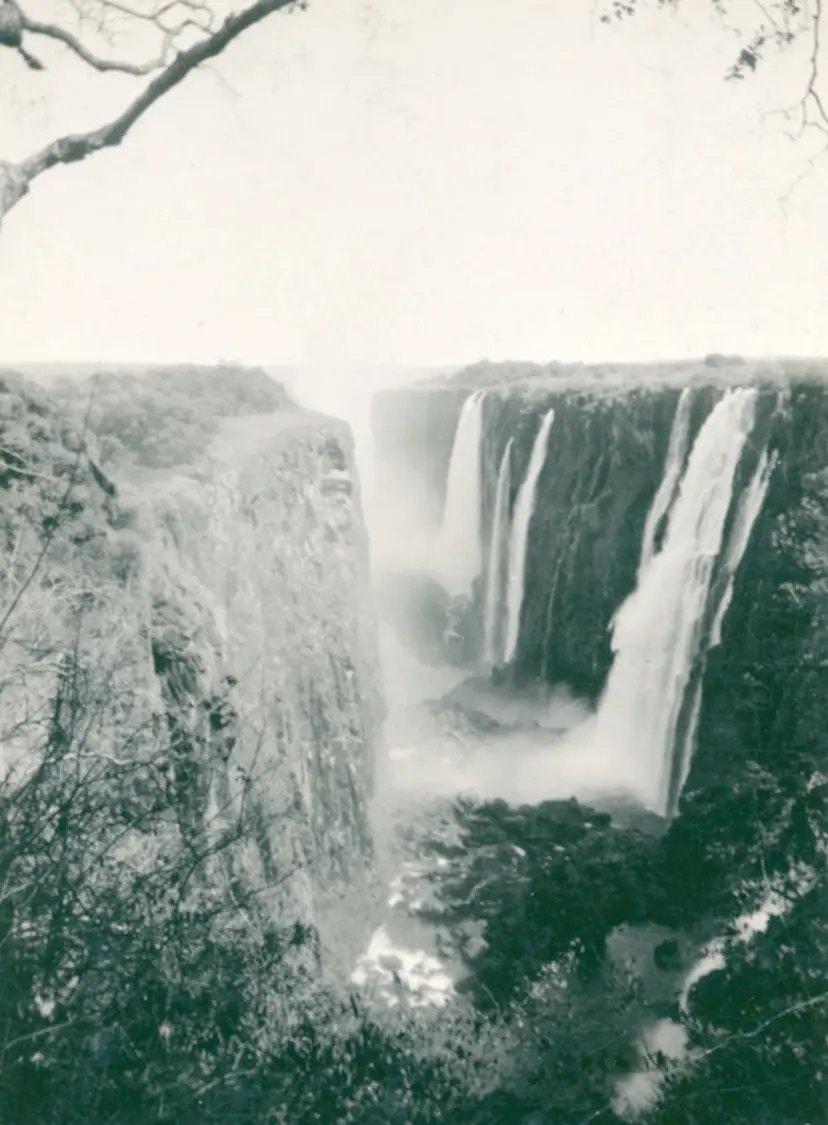
Mary Sophia Johnston (1875–1955) was a British geologist, keen amateur photographer, archivist and active member of the Geologists' Association. She was also one of the first female Fellows to be elected to the Royal Geographical Society in 1913 and the Geological Society in 1919. She is noted for her contributions to geological photography documenting her extensive travels in the early 20th century.

Born in Folkestone, Kent, Mary moved to London when her father died in 1888. She studied Geology at University College London from 1898 and joined the Geologists' Association of which she was an enthusiastic member, taking part in field trips both at home and abroad. In 1929 she travelled with the Geologists' Association to South Africa from where she travelled to the Victoria Falls to take part in geological and archaeological studies.

Mary donated the majority of her geological specimen collection to the Natural History Museum, London. The RGS is fortunate to hold over 350 of her photographs taken during her world travels which document many places across Europe, the United States of America and Africa.

The Partnership Tours

All historical images (photos, artwork, maps) ©RGS-IBG